Showing posts with label flower. Show all posts

Saturday, May 18, 2024

Appreciating the Beauty of Orchid Flowers


Orchids are one of nature’s most exquisite creations, captivating enthusiasts and casual observers alike with their intricate beauty and diverse forms. These remarkable flowers have a rich history and a wide array of species that make them a fascinating subject for both botanical study and personal admiration. Let's delve into the enchanting world of orchids and explore why they are so cherished.


Orchids are much more than just beautiful flowers; they are a testament to nature's ingenuity and diversity. Their stunning variety, intricate beauty, and rich symbolism make them a captivating subject for both study and enjoyment. Whether you are growing orchids, gifting them, or simply admiring their beauty, these flowers offer endless opportunities for appreciation and inspiration. By understanding their unique needs and characteristics, we can cultivate and cherish orchids, bringing a touch of natural elegance into our lives.


"Orchids remind us that true beauty lies in the delicate balance of strength and grace."


Enjoy the beauty of the orchid flowers!

xoxo,

veta

Friday, November 18, 2022

Lovely

Aren't they lovely? I hope you will like it.
This is my official entry for Floral Friday.


                                                                    FLORAL FRIDAY

Friday, August 31, 2018

I Heart Flowers


"A flower cannot blossom without sunshine, and man cannot live without love."--- Max Muller

Linked Post:


Location: Siargao Bleu Spa and Resort, Siargao Islands

Saturday, August 18, 2018

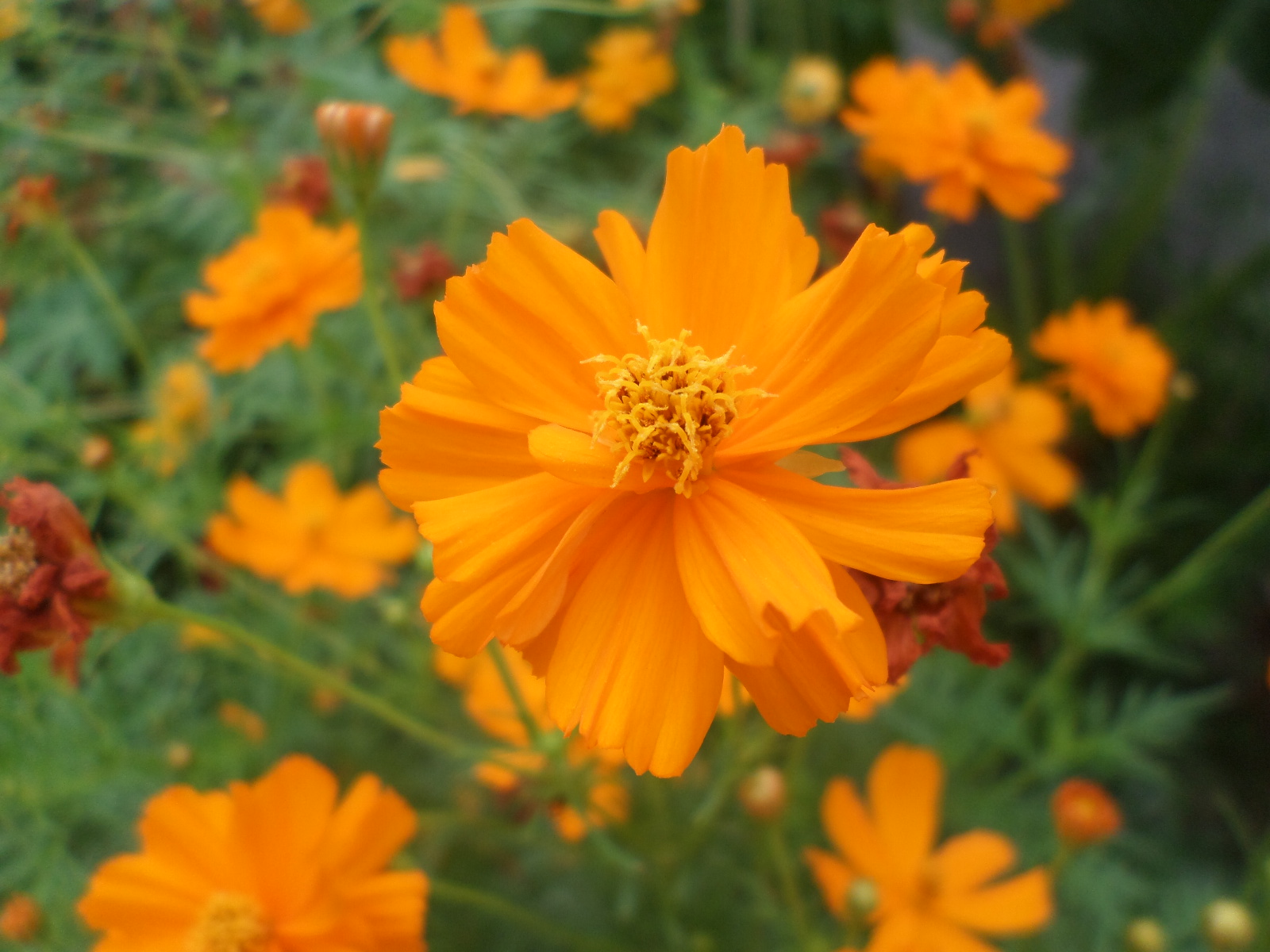
Yellow Cosmos


A flower doesn't love you or hate you,
 it just exists. 
---Mike White

Linked Post:


Location: Siargao Bleu Resort, General Luna, Siargao Island

Friday, August 10, 2018

Monday, August 1, 2016

Neighbor's Orchids


Aren't they lovely?

“Being happy doesn’t mean that everything is perfect. It means that you’ve decided to look beyond the imperfections.”
-Unknown

Be happy, every one!


Friday, July 29, 2016

#Flower?

Simplicity is not an end in art.
But we usually
arrive at simplicity
as we approach
the true sense of things.
--- Constantin Brancusi

Saturday, January 9, 2016

Saturday, December 5, 2015

Scarlet #Sage

The flowers of Salvias are fascinating up close. They are "bilabiate" which means "having two lips." There are often glandular hairs on the flowers and leaves. The stamens are fused into a lever, which bends down and deposits the pollen on the back of the visiting bee or bird as it probes the long flower tube. The female flower stigma develops next and is bent down to receive the pollen. The flower is adapted to many pollinators, rather than any specialized one. Salvias are always active with wildlife. Hummingbirds, butterflies, carpenter bees, and bumblebees are attracted to the flowers. Beneficial insects harbor on the foliage. Songbirds like the small seeds. A mixed planting of salvias, lavenders, rosemary, and daisies will give year-around color, help prevent garden pests, enhance pollination, and require very little water once established. (Source: redwoodbarn.com)

Friday, November 27, 2015

Lovely #Flowers

You're only here for a short visit. Don't hurry, don't worry. And be sure to smell the flowers along the way.
---Walter Hagen

Thursday, November 12, 2015

Aster

Asters are beautiful perennials that are found wild in North America and southern Europe. The genus Aster includes some 600 species of widely distributed flowering plants in the family Asteraceae.

Asters are popular garden plants because of their showy flower heads and the availability of flowers in multiple colors.

sters are also called as Starworts, Michaelmas Daisies, or Frost Flowers. Asters are found chiefly in North America, with some species extending into South America; others are distributed throughout Europe and Asia. The word Aster is of Greek derivation and refers to the Starlike flowers that can be white, red, pink, purple, lavender and blue, mostly with yellow centers.
(Source: theflowerexpert.com)

Monday, November 9, 2015

#Violet Morning Glory

Ipomoea purpurea, the purpletall, or common morning glory, is a species in the genus Ipomoea, native to Mexico and Central America. Like all morning glories the plant entwines itself around structures, growing to a height of 2–3 m tall. The leaves are heart-shaped and the stems are covered with brown hairs. The flowers are trumpet-shaped, predominantly blue to purple or white, 3–6 cm diameter. (Source: wikipedia)


Friday, October 30, 2015

Spell F-L-O-W-E-R

We need to find God, and he cannot be found in noise and restlessness. God is the friend of silence. See how nature - trees, flowers, grass- grows in silence; see the stars, the moon and the sun, how they move in silence... We need silence to be able to touch souls.
---Mother Teresa 


Saturday, October 24, 2015

Monday, October 19, 2015

Loyal Love

The Chrysanthemum flower symbolizes fidelity, optimism, joy and long life.
  • A red chrysanthemum conveys love
  • A white chrysanthemum symbolizes truth and loyal love
  • A yellow chrysanthemum symbolizes slighted love    


Sunday, October 11, 2015

#Red Rose

My life is part humor, part roses, part thorns.
---Bret Michaels

Red Roses: A red rose is an unmistakable expression of love.  
Red roses convey deep emotions - be it love, longing or desire. Red Roses can also be used to convey respect, admiration or devotion. A deep red rose can be used to convey heartfelt regret and sorrow. The number of red roses has special romantic meanings associated with them. 12 red roses is the most popular of all which conveys "Be mine" and "I love you". (Source: flowerexpert.com)

Saturday, October 3, 2015

Brain Celosia

Cockscomb flowers are also known as Wool Flowers or Brain Celosia, suggestive of a highly colored brain. The flowers belong to the amaranth family, Amaranthaceae. Cockscomb blooms with a compacted crested head 2-5 inches across, on leafy stems that are 12-28 inches long. The flower's name is suggestive of a rooster's comb. The Cockscomb flower blooms from late summer through late fall. The Celosia plant is an annual dicotyledon. In the Victorian language of flowers, Celosias symbolized humor, warmth, and silliness.

Cockscomb Facts

  • The exact origins of Cockscomb in the wild are unknown, though some assign the geographical origins to the dry slopes of Africa and India as well as the dry rocky regions of both North and South America.
  • Celosia comes from the Greek word 'kelos', meaning burned; apparently referring to the look of the brightly colored flowers in some species.
  • There are about 60 species of annual or perennial Celosia.
  • The contorted floral heads of the crested types of Cockscomb continue to enlarge throughout the growing season and often have colorful foliage as a complement.
  • Standing on long stiff stems, Cockscomb makes excellent fresh as well as a dried cut flowers.
  • In China the flower is called chi kuan, where it is extensively cultivated.
  • Celosia cristata are widely believed to have developed from Celosia argentea, which is listed as native to India but is common in the wilds in China.
  • Cockscomb flowers are seen in vibrant yellows, pinks, reds and gold colors.
  • Cockscomb has no fragrance.
  • The Cockscomb flower has 5-14 days of vase life.
  • Cockscomb flowers are said to resemble rooster combs or convoluted brains, Celosia argentea (Cristata group)
  • In West Africa, Central Africa, and Southeast Asia, Celosia argentea is grown as a leaf vegetable and cereal crop. In southern Nigeria, it is the most important leaf vegetable and is known as soko.
  • Celosia cristata is a common garden ornamental plant in China and other places. (Source: theflowerexpert.com)


Thursday, October 1, 2015

Bark, Black Ant and Carnation

One sunny afternoon
Only me and my cam
Seizing the moment
Whatever it takes

Photography is a way of feeling, of touching, of loving. What you have caught on film is captured forever... it remembers little things, long after you have forgotten everything. 
---Aaron Siskind 

 
 Photography takes an instant out of time, altering life by holding it still.
---Dorothea Lange 

 
 There is only you and your camera. The limitations in your photography are in yourself, for what we see is what we are. 
---Ernst Haas 

Friday, September 25, 2015

#Red Santan

Santan / Ixora coccinea / DWARF SANTAN : Philippine Medicinal Plants / Philippine Alternative Medicine. There are about 500 species in the genus Ixora. A few are in cultivation. There are numerous cultivars differing in flower color (yellow, pink, orange) and plant size.

The red Santan
 Ixora is a genus of flowering plants in the Rubiaceae family. It consists of tropical evergreen trees and shrubs and holds around 500 species. Though native to the tropical and subtropical areas throughout the world, its centre of diversity is in Tropical Asia.

 Ixora also grows commonly in subtropical climates in the United States, such as Florida where it is commonly known as West Indian Jasmine. Other common names include viruchi, rangan, kheme, ponna, chann tanea, techi, pan, santan, jarum-jarum, jungle flame, jungle geranium among others.

 The plants possess leathery leaves, ranging from 3 to 6 inches in length, and produce large clusters of tiny flowers in the summer. Members of Ixora prefer acidic soil, and are suitable choices for bonsai. It is also a popular choice for hedges in parts of South East Asia.

  In tropical climates they flower year round and are commonly used in Hindu worship, as well as in ayurveda and Indian folk medicine.

 The lovely flower, Santan. (Source: Wikipedia.com)


Dahilayan Forest Park Resort

Dahilayan Forest Park Resort is a popular destination in the Philippines, known for its natural beauty and adventure activities. Dahilayan F...

My Blog List

CopySpace

Protected by Copyscape DMCA Copyright Protection

Total Pageviews

Flag Counter

free counters